
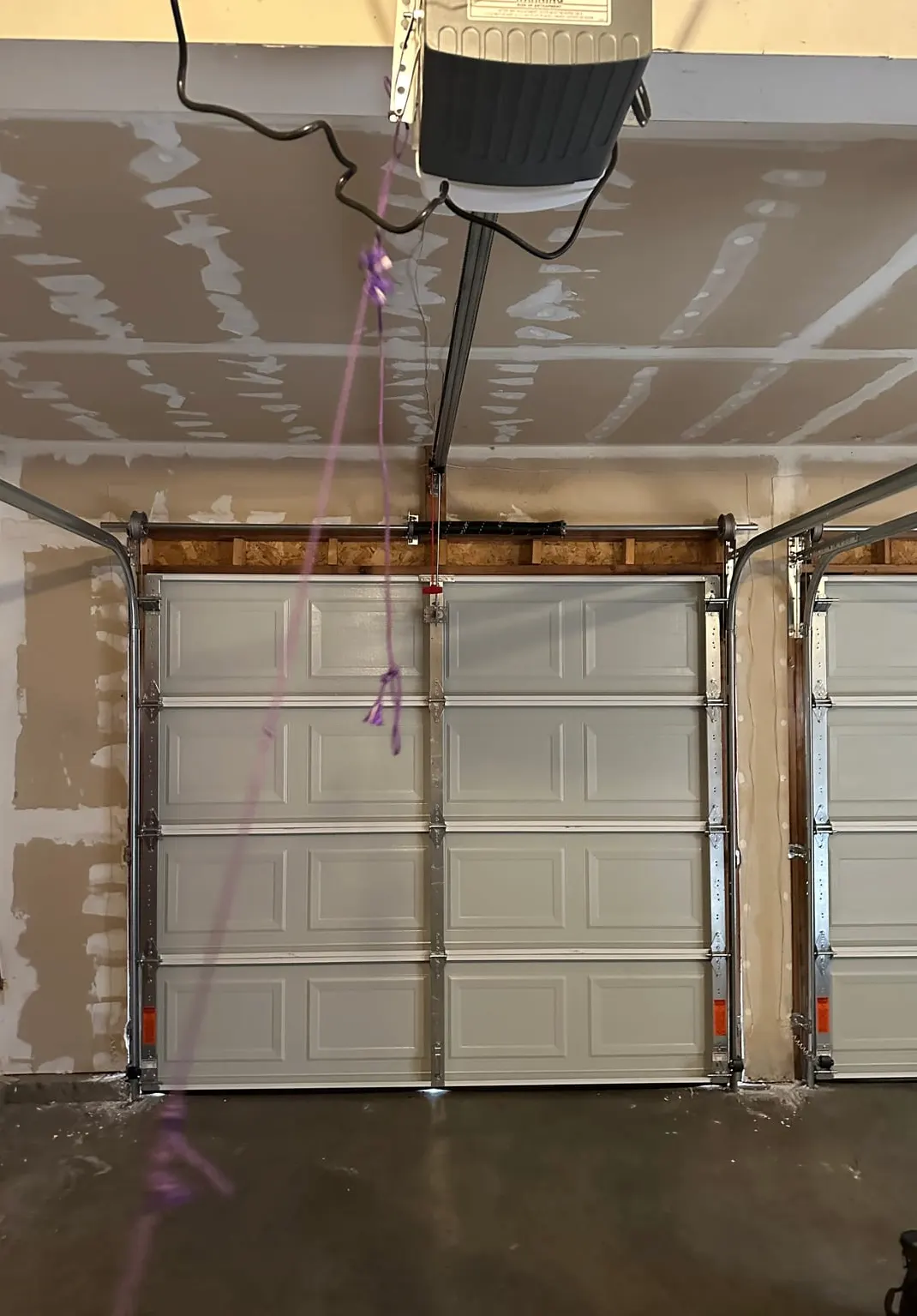
The door won't shut, and the light won't stop blinking
You hit the button on your way out, hear the motor run, and watch the door start down—then stop a foot off the floor and climb right back up. Or maybe it never moves past a few inches before reversing. The opener's control panel light is blinking in a repeating pattern, and there's no obvious obstruction in the doorway. That's the moment most homeowners first notice their photo-eye sensors are acting up, usually while they're already late and standing in the driveway wondering if the whole opener is dying.
It's rarely the opener. It's almost always the two small sensor units mounted a few inches off the garage floor on either side of the track, and in Geneva's climate they have a lot working against them.
What these sensors actually do
The photo-eye sensors project an invisible infrared beam across the bottom of the doorway. As long as that beam is unbroken, the opener assumes the path is clear and lets the door close normally. The instant something breaks the beam—a pet, a box, a shadow, or a sensor that's simply out of alignment—the opener reverses the door rather than let it come down on whatever is in the way. It's a federally mandated safety feature, and it's the reason garage doors don't crush the things (or people) underneath them.
Why they trip so often here
A few things in this part of Florida make sensor trouble more common than in drier, cooler climates:
- Humidity and condensation: On muggy mornings or after an afternoon downpour, moisture can fog the lens of one or both sensors, scattering the beam enough that the opener reads it as blocked.
- Dirt, pollen, and spider webs: Garages near grass and landscaping collect webs and dust fast, and a single strand across the lens is enough to cause intermittent reversals.
- Bumped brackets: Lawn equipment, bikes, or a stray soccer ball can nudge the mounting bracket just enough to throw off alignment. Even a slight tilt sends the beam off target.
- Low morning or late-afternoon sun: Direct sunlight hitting the receiver sensor at a low angle can wash out the beam, causing reversals that happen only at certain times of day.
- Rust and corrosion: In homes closer to the coast, salt air can corrode the small wire connections or brackets over time, leading to a loose or intermittent connection rather than a true alignment problem.
How bad it gets if you ignore it
A door that reverses is annoying, but it's doing its job. The real danger shows up when homeowners get frustrated and look for a workaround—disconnecting a sensor, taping over the indicator, or rewiring around the safety circuit so the door will close no matter what. Once that safety reversal is defeated, the door will close on anything in its path: a child darting in to grab a toy, a pet, a car bumper, or your own foot while you're hauling in groceries. These aren't rare freak accidents; they're exactly the scenario the sensors exist to prevent, and a door that's been forced to ignore them has no way to tell the difference between a shadow and a person standing in the doorway.
Cleaning and aligning the sensors yourself
Before assuming the worst, most sensor issues can be fixed in a few minutes:
- Wipe both lenses with a soft, dry cloth. Avoid household glass cleaner, which can leave a film; a microfiber cloth or lightly damp cloth works better.
- Check for obstructions like leaves, webs, or storage items that may have drifted into the beam path.
- Look at the indicator lights on each sensor. Most units show a solid light when aligned and a flickering or dim light when they're not seeing each other properly.
- Loosen the wing nut or mounting screw on one sensor and gently adjust its angle until both lights read solid, then retighten.
- Inspect the wiring running along the track for nicks, fraying, or corrosion, especially if the garage has had any flooding or heavy moisture exposure.
If the lights stay solid but the door still misbehaves only during storms or high humidity, the sensors themselves may be failing internally rather than just misaligned—worth noting for whoever services the opener next.
When to call Geneva Garage Door
If cleaning and realigning doesn't resolve it, or if you notice the bracket itself is bent, rusted, or won't hold position, it's time to call in a technician rather than keep adjusting it by hand. We handle this as part of both our Garage Door Maintenance & Tune-Up service and Off Track Door Repair calls, since a knocked-out-of-alignment sensor often points to a bracket or track issue that's worth checking while we're there. We'll test the full safety reversal system, replace any corroded wiring or sensor units, and make sure the door is reading the beam correctly before we leave.
If your Geneva, FL garage door is reversing, blinking, or refusing to close, don't rig around it—call Geneva Garage Door and we'll get the sensors reading true again.