
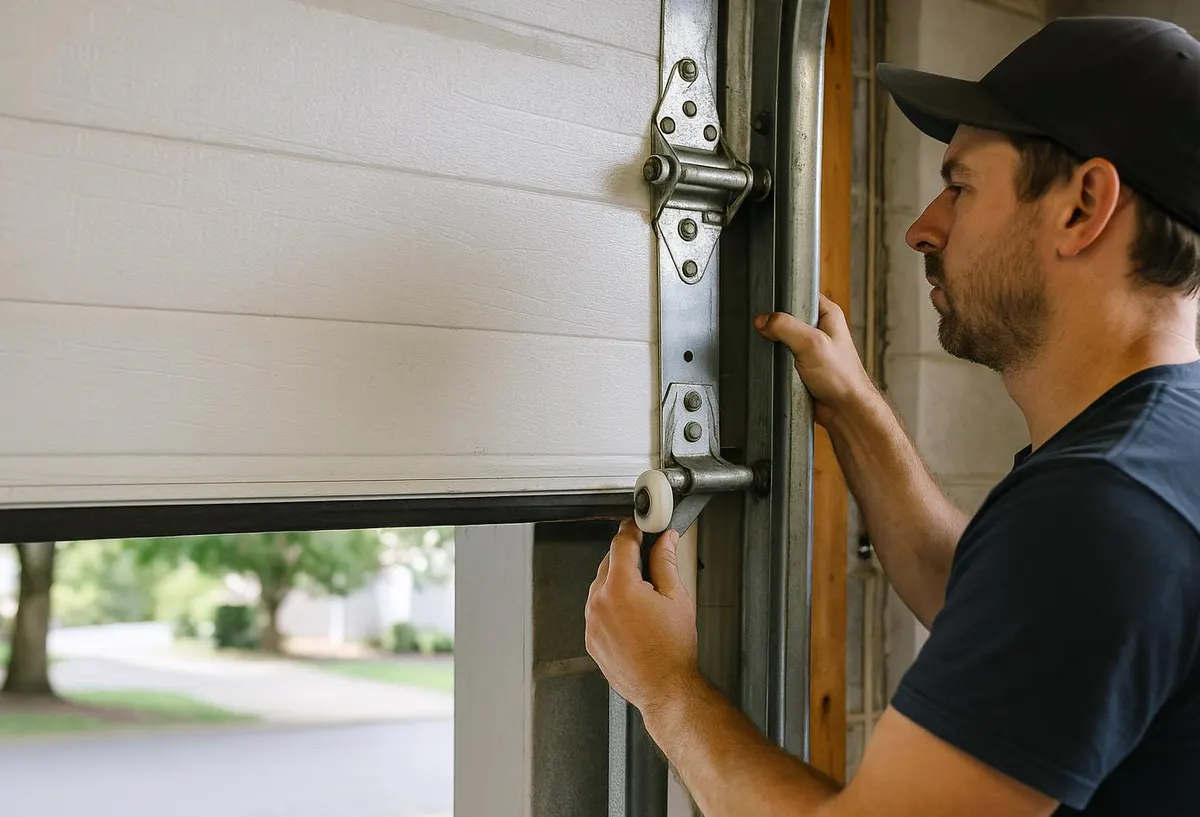
Rule of thumb: the type of noise usually tells you which part is failing before you even open the garage. Grinding points to metal-on-metal wear, squealing points to friction and dry parts, popping points to sudden tension release, and rattling points to loose hardware. The exceptions matter, though—a worn roller can squeal and grind depending on how bad it's gotten, and a spring on the edge of failure can pop once and then go quiet right before it snaps for good.
Here's how to read each sound the way a technician would, checking the most likely cause first and working down the list.
Grinding: Metal Parts Are Rubbing Where They Shouldn't
Grinding is a low, rough, mechanical sound that usually happens as the door moves along the track. It's rarely subtle—you'll hear it every time the door opens or closes, and it often gets worse over a few weeks rather than appearing overnight.
- Rollers first. Nylon rollers wear down and their bearings dry out or corrode, especially in humid conditions where moisture gets into the bearing housing. A technician checks for flat spots, cracked rollers, or rollers that wobble in the track. The fix is roller replacement, usually done in a set rather than one at a time since the others are close behind.
- Opener gear next. If the grinding is coming from the opener unit itself rather than the door, the drive gear inside the motor housing may be stripped. This is common on older chain-drive openers and shows up as grinding paired with the door moving slower than normal or stalling partway.
- Bearing plates and hinges last. On older doors, the bearing plates at the top of the track or the hinge pins between panels can wear out and start grinding against the shaft. These get lubricated or replaced depending on how far gone they are.
Squealing: Something Needs Lubrication or Is Nearly Worn Out
Squealing is a high-pitched sound, usually tied to movement, that often shows up first thing in the morning or after the door hasn't been used in a while.
- Lack of lubrication is the first check. Rollers, hinges, and the torsion spring itself all need a light coat of garage-door-specific lubricant. Afternoon downpours and the general humidity here wash out old lubricant faster than in drier climates, so this is a more frequent maintenance item than homeowners expect. The fix takes ten minutes with the right spray lubricant—never WD-40, which attracts dust and grit.
- Worn rollers come next. If lubrication doesn't quiet things down within a day or two, the rollers themselves are likely worn past the point of just needing oil. Replacement is the fix here too.
- Belt or chain tension on the opener. A belt-drive opener that's lost tension can squeal as it runs. This is a tension adjustment at the opener's trolley, not a full replacement.
Popping: Tension Is Releasing Somewhere It Shouldn't
Popping is a sharp, sudden sound—often just once or twice during a cycle, not continuous like grinding or squealing. This one gets people's attention because it sounds like something just broke.
- Springs are checked first, always. A torsion spring under uneven tension, or one that's starting to fail, can make a loud pop as coils shift or as the spring catches and releases. This is not a DIY inspection item—springs are under enough tension to cause serious injury, and a spring that's popped once is often close to full failure. A technician will look at coil spacing and winding cone condition before touching anything.
- Track misalignment is next. If the track has shifted slightly, rollers can catch and then pop free as they pass the misaligned section. This shows up more often after a hard storm impact or years of minor settling, which isn't unusual in this region given the wind loads garage doors are built to handle during hurricane season.
- Panel swelling from humidity. Wood and composite doors can swell slightly in sustained humidity, and the resulting friction against the track or stop molding can produce a popping sound as the door forces past the tight spot. This is seasonal and often gets worse during the wettest stretches of summer and early fall.
Rattling: Hardware Has Worked Itself Loose
Rattling is a looser, shakier sound—more vibration than impact—and it's usually most noticeable on windy days or when the door is fully open or closed.
- Loose hardware first. Nuts, bolts, and hinge fasteners work loose over time from regular vibration. A full hardware check with a wrench, tightening everything from track brackets to roller brackets, solves this in most cases.
- Track bolts next. If tightening the door panels doesn't fix it, the bolts holding the track to the frame are the next check, especially after storm-force winds have put repeated stress on the system.
- Opener chain or belt slack. A chain-drive opener with a loose chain will rattle against the rail during operation. This is a quick tension adjustment.
When to Call Geneva Garage Door
If you've tightened hardware and lubricated the moving parts and the noise is still there—or if you hear popping from the spring area—it's time to call in a technician rather than keep testing it. Our Garage Door Spring Repair service handles tensioned components safely, and our Garage Door Maintenance & Tune-Up service covers the full inspection: rollers, hinges, track alignment, lubrication, and hardware torque, all in one visit. Given how fast humidity and salt air can accelerate wear out here, an annual tune-up before hurricane season catches most of these problems before they turn into an off-track door or a snapped spring.
If your garage door in Geneva, FL is making noise you can't explain, give us a call—we'll track down the cause and fix it before it turns into a bigger repair.