
It usually starts the same way. You're backing out of the driveway, or pulling in after work, and your spouse says something like, "Have you noticed the door looks kind of rough next to the Hendersons'?" Maybe the paint has chalked and faded from months of Florida sun. Maybe one panel is bowed from the last tropical storm, or there's a rust bloom creeping up from the bottom seal where water pooled after an afternoon downpour. Suddenly you're arguing about whether to spend real money on a new door or just live with it for another few years.
Here's the honest, no-sales-pitch version of that conversation.
Why the Garage Door Carries So Much Visual Weight
On most homes, the garage door is the single largest moving part on the front of the house, and often the largest flat surface, period. If your house has a two-car garage facing the street, that door can account for a huge share of what people see before they ever notice the landscaping or the front entry. That's why a dated, dinged-up, or mismatched door drags down the whole look of a home even when everything else is in good shape, and why a clean, well-proportioned door can make an older house look cared for.
What Resale Studies Actually Say (Realistic, Not Hyped)
You've probably seen headlines claiming garage door replacement returns well over 90% of its cost at resale, sometimes even more than the project cost. Those figures come from national remodeling cost-versus-value surveys and they're real, but treat them as a general range, not a guarantee specific to your street. A few things to keep in mind:
- Return on investment is highest when the old door was genuinely bad — faded, dented, or visibly out of style. If your current door is only a few years old and in decent shape, a cosmetic refresh (new paint, new hardware, new windows insert) may get you most of the benefit for a fraction of the cost.
- Buyers notice problems, not perfection. A straight, clean, properly operating door reads as "well-maintained house." An ultra-premium custom door rarely adds proportional extra value — buyers expect a nice door, they don't pay a premium for an exceptional one.
- Function matters as much as looks. A door that's quiet, opens smoothly, and has a working opener will outperform a good-looking door that grinds, sticks, or needs a shove to close, every time, in a home inspection or a showing.
The Trade-Off Nobody Argues About Enough: Repair vs. Replace
This is usually the real argument hiding under "does it look bad." Before anyone commits to a full replacement, it's worth separating cosmetic issues from mechanical ones:
- Cosmetic only (faded paint, minor surface rust, outdated panel style) — often solvable with cleaning, repainting, or swapping decorative hardware, no new door needed.
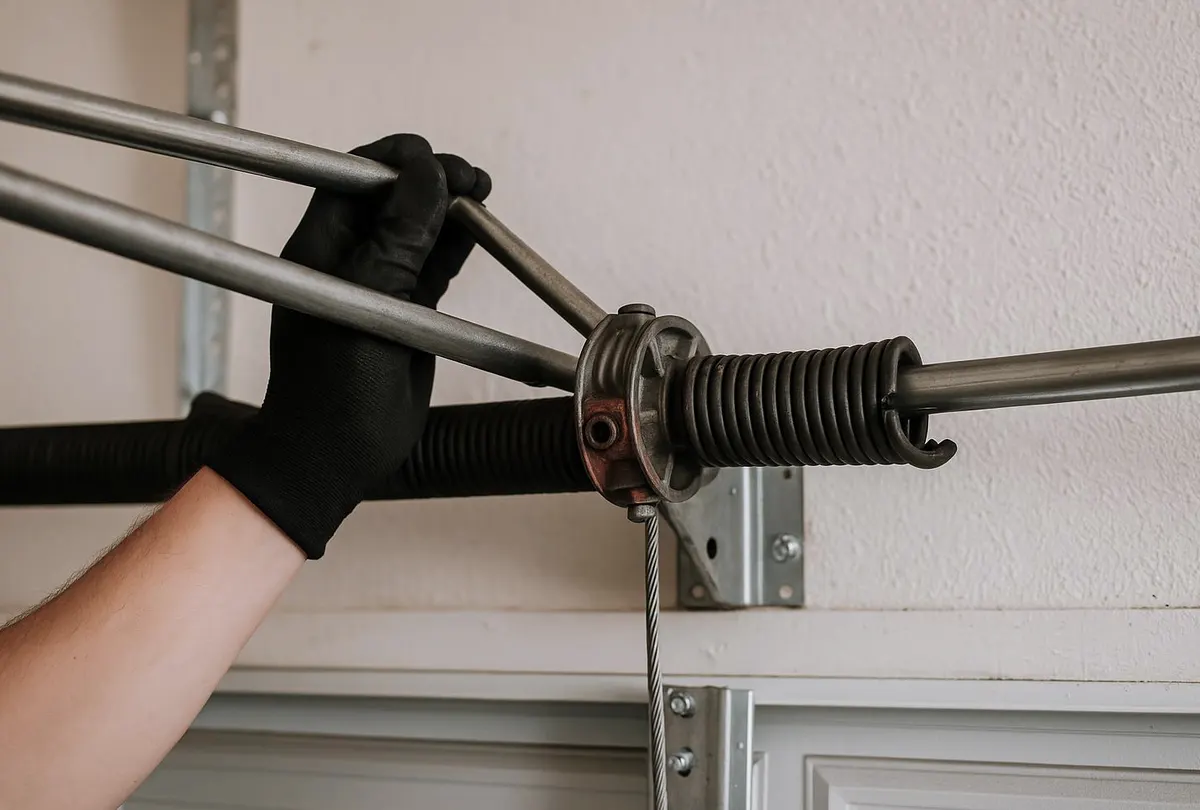
- Mechanical but fixable (broken spring, frayed or snapped cable, door off its tracks, noisy opener) — these are repair jobs, and fixing them usually restores both function and a chunk of the curb appeal, since a crooked or sagging door is far more noticeable than faded paint.
- Structural (warped or swollen panels, rusted-through sections, a frame that's been impact-damaged) — this is where replacement starts making more financial sense than repeated patch jobs.
Why Local Weather Changes the Math
In this part of Florida, the garage door takes a beating that doors in drier climates never deal with. Humidity and afternoon downpours mean wood and composite panels can swell, warp, or delaminate over time if the seals have failed. Homes closer to the coast deal with salt air that accelerates rust on tracks, hinges, and steel panel edges faster than inland properties. And because this region sits squarely in hurricane season's path, any new door has to meet wind-load requirements, not just look good. That's not just a safety box to check; a door engineered for wind resistance is also generally a sturdier, better-built door overall, which matters to future buyers and insurers alike.
Practically, this means two things if you're leaning toward replacement:
- Don't choose a door based on photos alone. Ask specifically about its wind-load rating and how the panels and track hardware hold up to humidity and salt exposure, especially if you're closer to the coast or in an area with regular storm exposure.
- If you're repairing rather than replacing, check the bottom seal and weatherstripping while you're at it. Water intrusion around a failing seal is often what causes the rust and swelling that eventually force a full replacement anyway.
So Who's Right in the Argument?
Usually, both of you, partially. The spouse who wants it to look better is responding to something real: a tired-looking garage door does make a house look older and less maintained than it is. The spouse pushing back on the cost is also right that an expensive, feature-loaded door won't pay for itself the way a clean, properly functioning, well-proportioned one will. The reasonable middle ground is almost always: fix what's broken, clean up or refresh what's just ugly, and only go for a full replacement when the door's structure, insulation, or wind performance is genuinely falling short.
When to Call Geneva Garage Door
If you're not sure which category your door falls into, that's exactly the kind of judgment call worth getting a second opinion on before spending money either direction. Geneva Garage Door can run a full Garage Door Maintenance & Tune-Up to catch and fix the small issues — a sticking track, worn rollers, a seal that's letting moisture in — before they turn into bigger, uglier, more expensive problems. And if the door really has reached the end of its useful life, our Garage Door Installation & Replacement service includes guidance on wind-load-rated options built for this climate, so you're not guessing at what will actually hold up through another storm season.
If your garage door is at the center of a disagreement at your house, let's settle it with a real inspection instead of a guess. Call Geneva Garage Door today to schedule service anywhere in Geneva, FL and the surrounding Seminole County area.