
What One More Season of an Unbalanced Door Costs You
A garage door that's out of balance doesn't announce itself with a loud bang. It shows up as a slightly slower opener, a motor that runs a little hot, a chain that rattles more than it used to. Ignore it through another stretch of Central Florida humidity and storm cycles, and the springs keep losing tension while the opener keeps compensating. Eventually something gives: a stripped gear, a snapped cable, or a motor that burns out years before it should. Opener replacement typically runs in the hundreds of dollars range once you add parts and labor. A balance test takes five minutes and costs nothing.
Why This Matters More Here Than in Drier Climates
Garage doors in this part of Florida carry extra weight from wind-load reinforcement, and that weight relies on correctly tensioned springs to move smoothly. Humidity and the afternoon downpours common to the area can swell wood-composite panels and accelerate rust on spring coils and cable ends, especially on older doors. Both problems throw off balance gradually, so the opener absorbs the difference without anyone noticing until it fails.
Tools You'll Need
- Work gloves
- A flashlight
- A step stool (for taller doors)
- A notepad or your phone, to record what you see
Step-by-Step: Testing Your Garage Door's Balance
- Close the door completely. Start from a fully closed position so you have a clean baseline.
- Disconnect the opener. Pull the manual release cord (usually a red rope hanging from the trolley) to disengage the opener arm. This lets the door move freely on its springs alone.
- Lift the door by hand to about waist height. Go slow and keep your fingers clear of the track edges.
- Let go and watch. A properly balanced door will stay put or drift down only slightly. If it slams shut or shoots upward, the springs are no longer carrying their share of the load.
- Repeat near the top of the travel. Raise the door most of the way open, let go again, and confirm it holds steady rather than dropping.
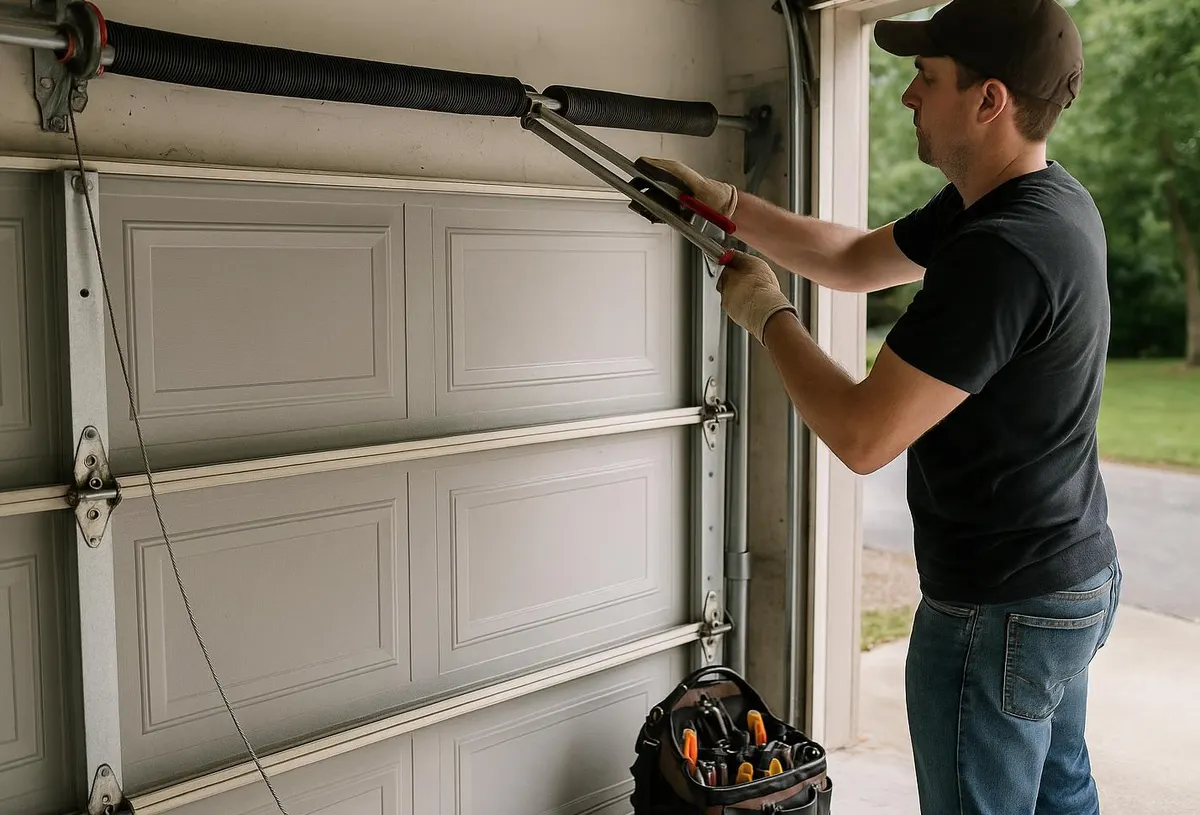
- Inspect the springs and cables while you're there. Look for visible rust, gaps between coils, fraying, or uneven stretching from one side to the other.
- Reconnect the opener. Pull the release cord toward the door (or run the opener briefly) until the trolley re-engages with the carriage.
- Write down what you observed. Note where the door moved on its own and how far, in case a technician needs the details.
What an Unbalanced Door Is Doing to Your Opener
The opener is designed to assist a balanced door, not lift dead weight. When springs weaken, the motor works past its intended duty cycle on every cycle, which heats up the gears and wears the drive belt or chain faster than normal. Force sensors may start triggering false reversals as the opener struggles to tell the difference between an obstruction and simple extra resistance. Over time this shortens the opener's working life and can trip breakers or cause intermittent failures that look unrelated to the actual cause.
What You Can Handle vs. What Needs a Technician
The balance test itself, a visual check for rust or fraying, and listening for new noises are all safe for a homeowner to do. Adjusting spring tension, replacing torsion or extension springs, and realigning tracks are not. Garage door springs are under extreme tension and have caused serious injuries when handled without the right tools and training. If your test showed the door dropping fast, drifting significantly, or you spotted visible spring damage, that's the line where this becomes a job for a technician.
When to Call Geneva Garage Door
If your balance test turned up a door that won't hold position, or if the opener has been straining more than usual, it's time for a closer look. Our Garage Door Spring Repair service corrects tension safely and replaces worn springs before they fail outright, and our Garage Door Maintenance & Tune-Up covers a full inspection of cables, rollers, and track alignment so small issues get caught before they turn into opener damage or a stuck door.
If your garage door failed its balance test, don't wait for the opener to tell you the hard way. Call Geneva Garage Door for a tune-up or spring inspection and keep your door — and your opener — working the way they should.